
What's Wrong With My Sewing Machine? 7 Common Problems (and How to Fix Them)
If you've just started sewing, chances are you've had at least one moment where you wanted to throw your sewing machine out the window.
The thread keeps breaking.
The fabric gets pulled into the needle plate.
Your stitches suddenly turn into a tangled bird's nest.
The good news? Most of these problems aren't caused by a broken sewing machine. They're usually small setup mistakes that almost every beginner makes (myself included).
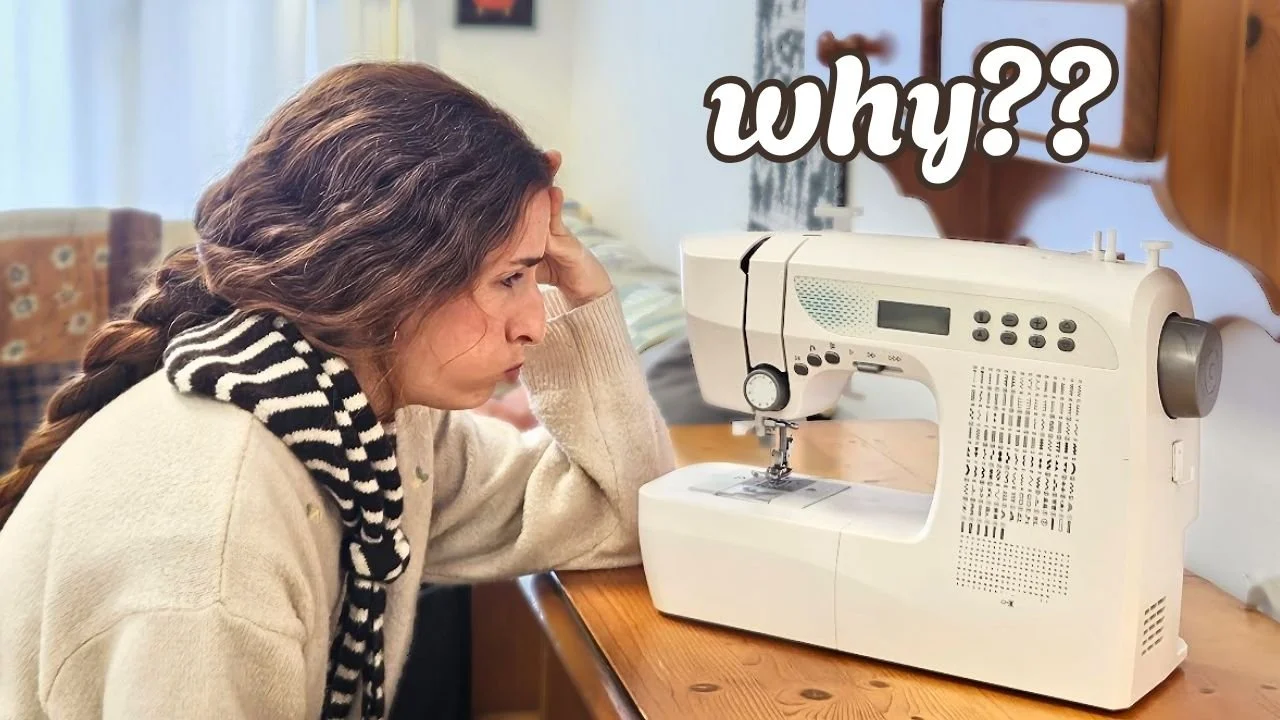
I've been sewing for about three years now, and I still remember how frustrating those first weeks were. That's exactly why I made a complete beginner's video showing every step on camera—from threading the machine to winding the bobbin and fixing common sewing problems.
👉 Watch the full beginner sewing machine tutorial here:
1. Your sewing machine is making a bird's nest underneath
If the underside of your fabric looks like a tangled mess, don't panic.
This is probably the most common beginner problem, and it's usually caused by one of these:
the machine wasn't threaded correctly
the bobbin was inserted the wrong way
the needle isn't installed correctly
These are surprisingly easy to fix once you know what to look for. In the video, I show exactly how the bobbin should sit and how to thread the machine correctly, because it's much easier to understand when you can actually see it.
2. Your sewing machine keeps skipping stitches
Skipped stitches often make people think something is seriously wrong with the machine.
The first thing I always check is the needle.
A worn-out, bent, or incorrect needle can cause skipped stitches even if everything else is set up properly. Different fabrics also require different needle types, so using the right one makes a huge difference.
In my video, I explain which needles to use for cotton, knit fabrics, and denim, plus how to install them correctly.
3. The thread keeps breaking
Broken thread is another frustrating issue that usually has a simple explanation.
Before adjusting lots of settings, check:
Is the machine threaded correctly?
Is the thread caught somewhere?
Is the needle damaged?
Is the tension set extremely high?
Many beginners immediately start turning every dial on the machine, but that often creates even more problems.
4. The machine won't sew
This sounds obvious—but after teaching beginner sewing classes, I can tell you it happens all the time.
Before assuming your machine is broken, check:
Is it switched on?
Is the presser foot lowered?
Is the pedal plugged in?
Is the bobbin empty?
I've seen every one of these happen!
5. The fabric keeps getting pulled into the machine
When the machine "eats" your fabric, it's often because you're starting too close to the raw edge or pulling the fabric while sewing.
Holding the thread tails for the first few stitches also helps prevent tangles at the beginning of a seam.
I demonstrate exactly how I start every seam in the video so you can compare it with your own technique.
6. Your stitches don't look balanced
If the top and bottom of your stitching look completely different, the tension may need adjusting.
However, tension isn't always the culprit.
Incorrect threading, an improperly inserted bobbin, or the wrong needle are often the real cause.
That's why I recommend checking the basics before touching the tension dial.
7. Maybe... nothing is actually wrong
This is something I wish someone had told me when I started sewing.
Learning to sew involves making mistakes.
Lots of them.
Sometimes you'll thread the machine incorrectly three times before getting it right.
Sometimes you'll sew a piece upside down.
Sometimes you'll spend twenty minutes troubleshooting only to realise the presser foot was still raised.
That's completely normal.
The more familiar you become with your machine, the easier it gets to spot what's causing the problem.
Watch the full beginner sewing machine guide
Reading about these fixes is helpful, but sewing is a visual skill.
That's why I put together a complete beginner-friendly tutorial where I walk through every step slowly, including:
setting up your sewing machine
choosing the right needle
winding and inserting the bobbin
threading the machine correctly
understanding tension
avoiding common beginner mistakes
making your first seam
If your sewing machine has been driving you crazy, I think it'll save you a lot of frustration.
